Pheromone Tools for Waterway Protection
About the Project:
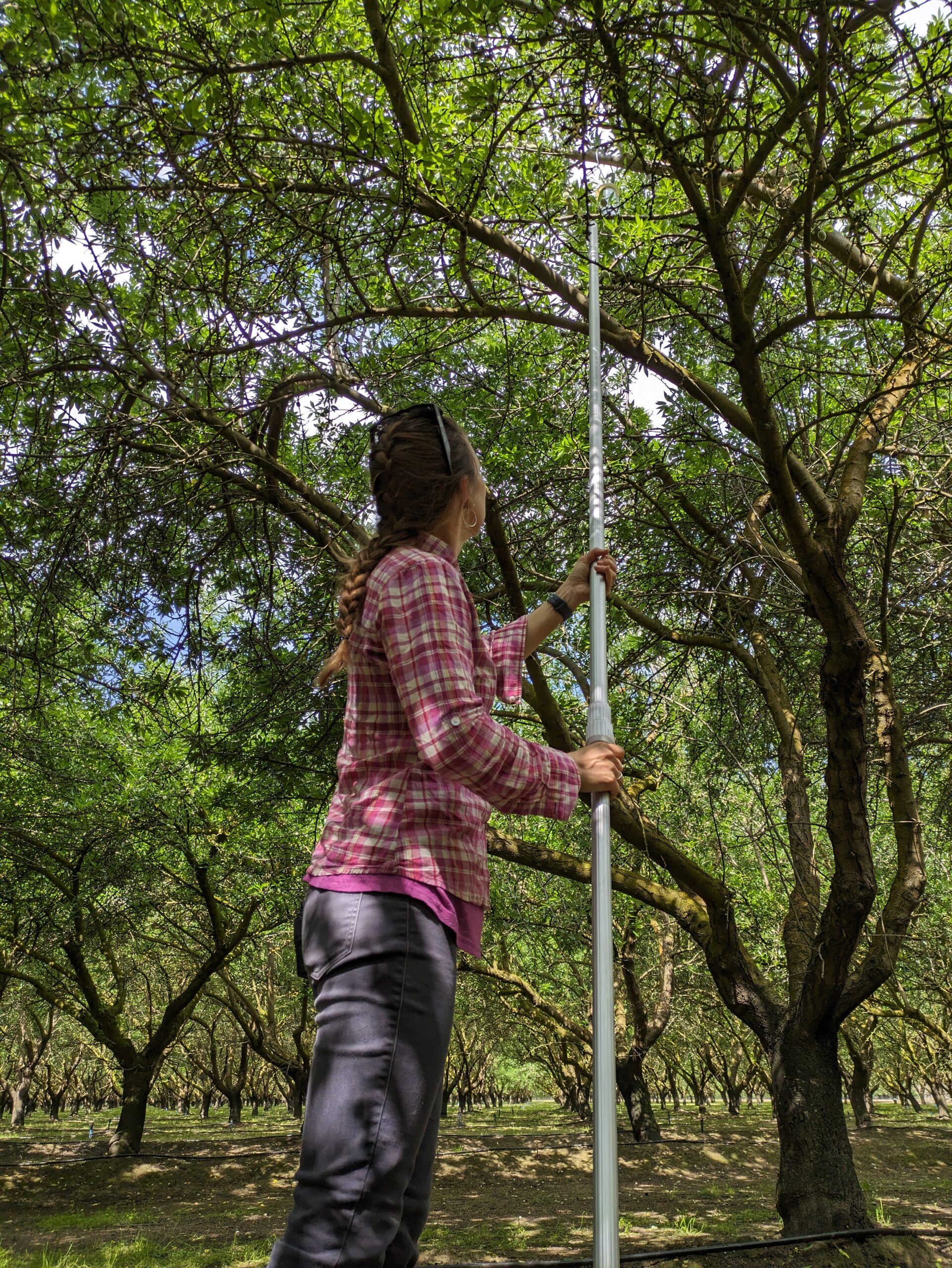
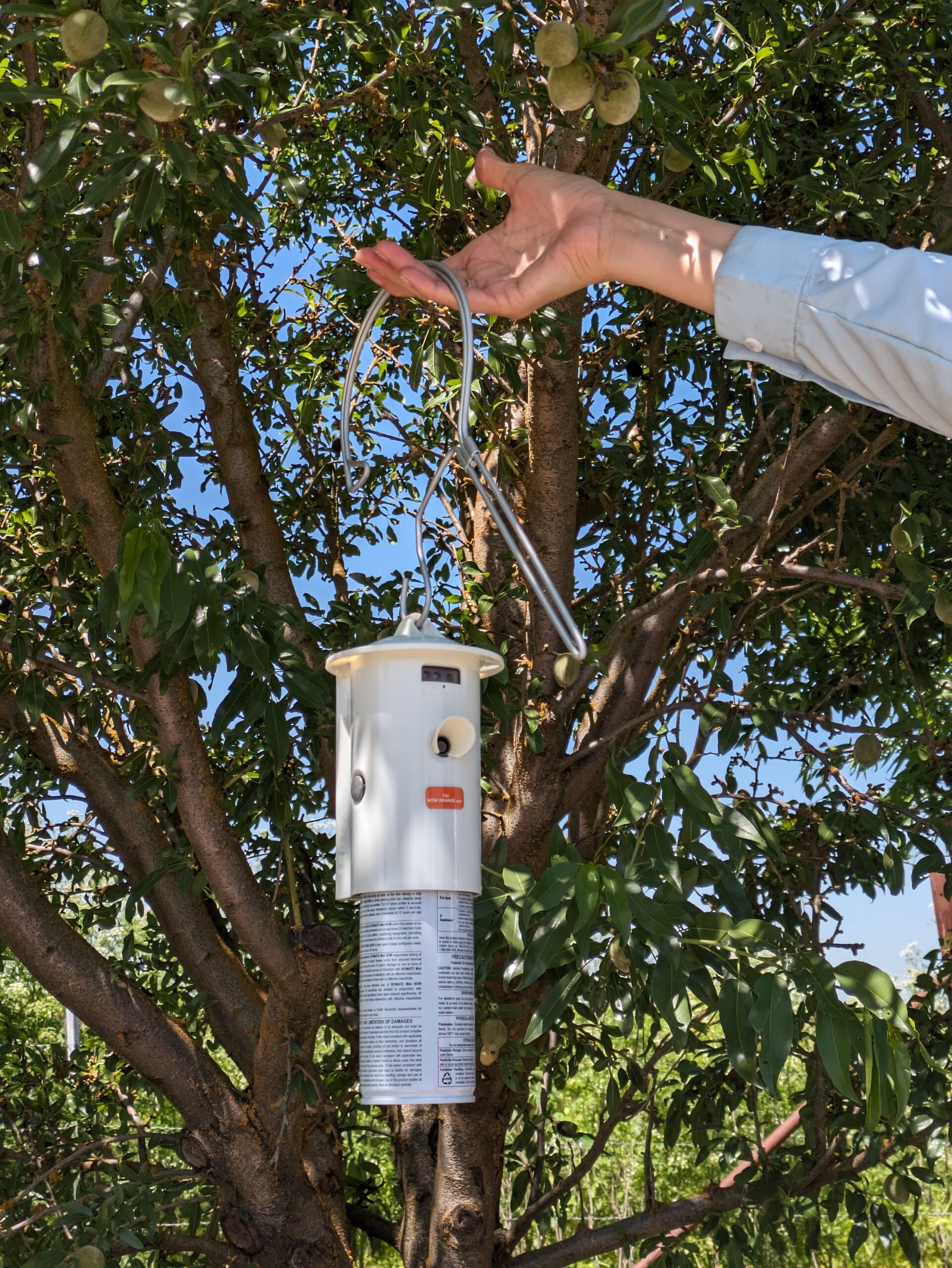
CURES launched an initial project in spring 2024 to demonstrate how area-wide use of pheromone mating disruptors (PMDs) in almond, walnut, and pistachio orchards can help reduce reliance on pyrethroid insecticides. These chemicals are commonly detected in local creeks and waterways, in some areas at levels exceeding water quality standards. The project spans 1,300 acres along Dry Creek- in the Modesto and Waterford areas of California- and promotes more environmentally responsible pest management practices. By working closely with growers and pest control advisors (PCAs), we aim to identify practical, on-the-ground strategies that support healthy crops while also protecting water quality and surrounding ecosystems.
Building on these efforts, CURES is expanding the project during the 2026 and 2027 growing seasons to approximately 1,600 acres of almond and walnut orchards along Dry Creek. This next phase will continue the use of PMDs for NOW in almonds while also incorporating pheromone-based disruption strategies for codling moth in walnuts, allowing the project to address multiple key pests across crops within a coordinated, watershed-scale approach.
Pacific Biocontrol:

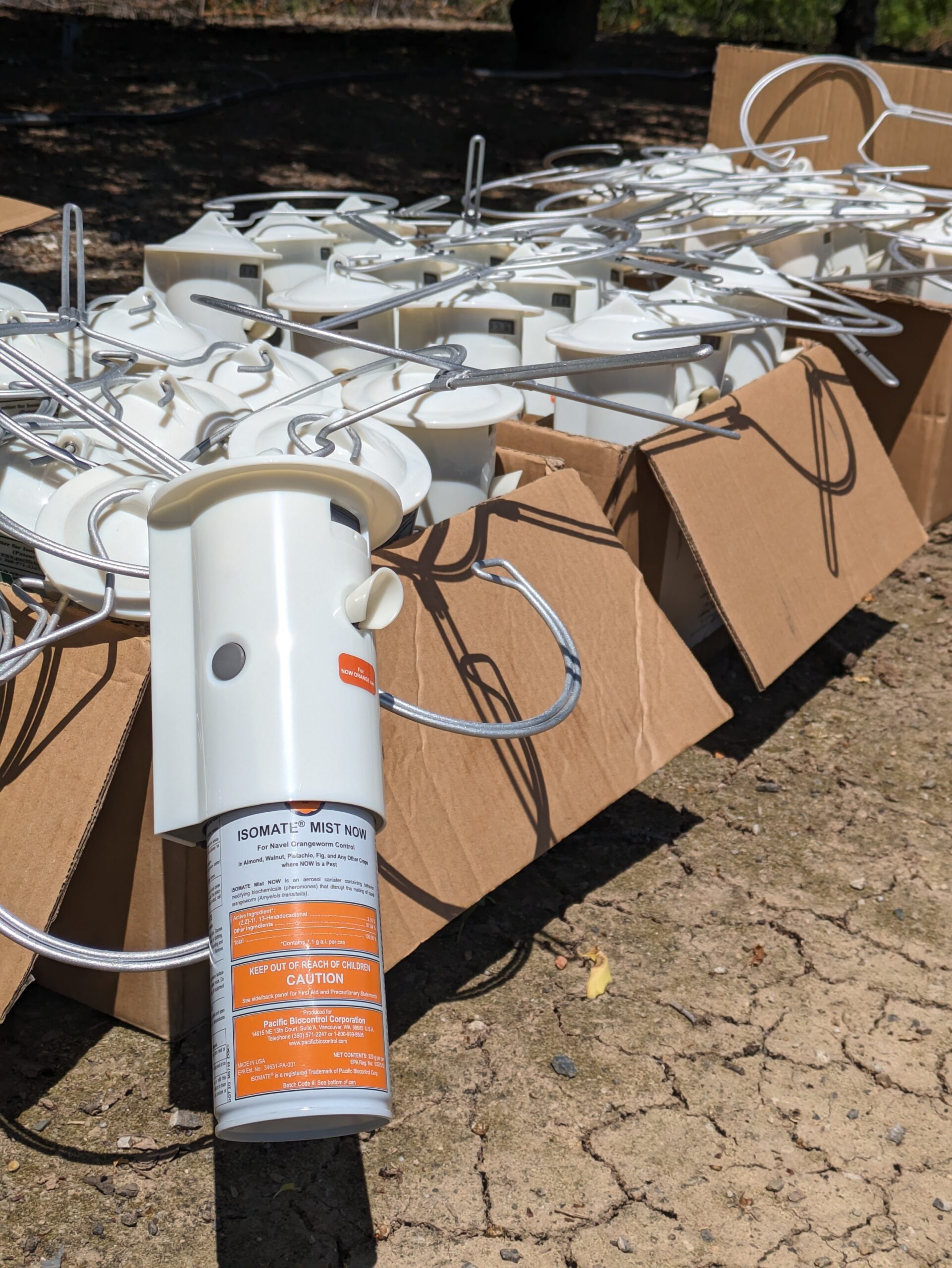
CURES has partnered with Pacific Biocontrol to provide growers with Navel Orangeworm (NOW) and Codling Moth pheromone mating disruptors. If you are interested in procuring your own mating disruptors, please contact Jeannine Onstott at jonstott@pacificbiocontrol.com
2025 Dry Creek Testimonials
"A combination of PMDs and sanitation made a significant difference in lower damage %."
"PMDs almost completely removed the need for a second spray. We did 1 ½ sprays during the season."
"With the PMDs we only had to spray once in the season where typically we spray twice. The PMDs in combination with sanitation worked for us really well."
"We had a damage percent of 1.1, but the PMDs in combination with cover cropping and other regenerative practices are what help us when not sanitizing, it brings a lot of beneficial insects."
Pacific Biocontrol:
About the Project:
CURES launched an initial project in spring 2024 to demonstrate how area-wide use of pheromone mating disruptors (PMDs) in almond, walnut, and pistachio orchards can help reduce reliance on pyrethroid insecticides. These chemicals are commonly detected in local creeks and waterways, in some areas at levels exceeding water quality standards. The project spans 1,300 acres along Dry Creek- in the Modesto and Waterford areas of California- and promotes more environmentally responsible pest management practices. By working closely with growers and pest control advisors (PCAs), we aim to identify practical, on-the-ground strategies that support healthy crops while also protecting water quality and surrounding ecosystems.
Building on these efforts, CURES is expanding the project during the 2026 and 2027 growing seasons to approximately 1,600 acres of almond and walnut orchards along Dry Creek. This next phase will continue the use of PMDs for NOW in almonds while also incorporating pheromone-based disruption strategies for codling moth in walnuts, allowing the project to address multiple key pests across crops within a coordinated, watershed-scale approach.
2025 Dry Creek Testimonials
"A combination of PMDs and sanitation made a significant difference in lower damage %."
"PMDs almost completely removed the need for a second spray. We did 1 ½ sprays during the season."
"With the PMDs we only had to spray once in the season where typically we spray twice. The PMDs in combination with sanitation worked for us really well."
"We had a damage percent of 1.1, but the PMDs in combination with cover cropping and other regenerative practices are what help us when not sanitizing, it brings a lot of beneficial insects."
This project has been made possible by: